CREATORS OF THE COMPLIANCE TUNE-UP®

AARMR | ABA | ACAMS | ALTA | ARMCP | IAPP | IIA | MBA | MERS® | MISMO | NAMB

Showing posts with label FHA. Show all posts

Tuesday, April 30, 2013

FHA: Mortgagee Review Board - Administrative Actions

Periodically, we review with you the types of administrative actions taken by HUD's Mortgagee Review Board (MRB).
The review of the MRB's published administrative actions should be considered a teaching moment for all FHA approved mortgagees, inasmuch as the MRB is empowered to enforce its administrative sanctions through, among other things, reprimand, probation, suspension or withdrawal of approval and/or underwriting authority, cease-and-desist orders, and civil money penalties.
On April 11, 2013 HUD published the administrative actions taken by the Mortgagee Review Board (MRB) against certain FHA mortgagees. The period covered in the issuance is January 1, 2012 to September 30, 2012.
In this article, we provide an outline of the kinds of violations and respective sanctions that the MRB recently sustained.
_____________________________________________________
IN THIS ARTICLE
A Word to the Wise
Rule of Thumb
Administrative Actions
Library
_____________________________________________________
A Word to the Wise Word
In representing clients before the MRB, we can vouch for the exhaustive due diligence that is virtually mandated, the considerable costs involved, the experienced legal counsel and requisite regulatory compliance expertise that is needed, and the significant adverse impact on an FHA lender's ability to conduct or even continue in business.
It's easy to get lulled into a sense of false confidence by thinking that some violations are minor. But if the MRB gets involved, those minor violations will become a part of the causes for administrative action, and even in some instances the proximate cause of the administrative action.
Nothing should be considered a "minor" violation, when originating HUD/FHA mortgage loans.
It is instructive to note the causes for the administrative action brought against an FHA-approved mortgagee.
Ignorance is a futile defense, when it comes to the causes that can affirmatively contribute to disciplinary action.
_____________________________________________________
Rule of Thumb Rule
The MRB is not sympathetic to a mortgagee that violates HUD/FHA requirements which are, or are expected to be, within the mortgagee's control.
Violations that are not, or not expected to be, in the mortgagee's control provide the MRB with a more nuanced basis upon which to provide some leniency.
_____________________________________________________
Administrative Actions
VIOLATION:
Failed to notify the Department that it was the subject of multiple state regulatory actions and sanctions, and submitted false certifications to HUD in connection with its annual renewal of eligibility documentation for its fiscal years ending in 2009, 2010 and 2011.
ACTION: Civil money penalty in the amount of $75,000.
VIOLATION:
Failed to perform quality control functions in compliance with HUD/FHA requirements, failed to meet the requirements for participation in the FHA mortgage insurance program, failed to ensure the correct mortgagee identification number was used when originating FHA-insured mortgage loans, failed to adequately document the source of and/or adequacy of funds used for closing, failed to correctly calculate and document the mortgagor's income, failed to verify the stability of the mortgagor's income, failed to ensure the mortgagor was eligible for an FHA-insured mortgage loan, failed to ensure the property met HUD's eligibility requirements, failed to comply with TOTAL Scorecard requirements, failed to comply with HUD's property flipping requirements, failed to provide construction documents required for property eligibility and/or high ratio financing resulting in over-insured mortgages, failed to ensure that the maximum mortgage amount was correctly calculated, resulting in over-insured mortgages, failed to ensure that data submitted to HUD systems was accurate, and charged mortgagors unallowable fees.
ACTION:
Notice of Administrative Action immediately and permanently withdrawing the FHA approval.
VIOLATION: Failed to obtain adequate documentation of the income used to qualify a borrower, failed to resolve discrepancies and/or conflicting information before submitting loans for FHA mortgage approval, and failed to ensure mortgagors were not charged fees that were excessive and/or unreasonable for the services performed.
ACTION:
Settlement Agreement that required civil money penalties in the amount of $17,000, to indemnify HUD/FHA for its losses with respect to two FHA-insured loans, and to refund borrowers for excessive origination fees.
VIOLATION:
Submitted or caused to be submitted false information to HUD in relation to 63 mortgagee record changes, failed to reconcile its portfolio data and allowed HUD records to incorrectly identify the mortgagee as the holder of 97 FHA-insured mortgage loans, and submitted false information to HUD on 133 claims for FHA insurance benefits and, in 90 instances, claimed benefits for ineligible holders of record.
ACTION: Settlement Agreement that, among other things, required a civil money penalty in the amount of $1.2 million and to complete mortgage record changes to facilitate the payment of certain FHA insurance claims.

Thursday, September 13, 2012

HUD: Causes of Administrative Actions

The Department of Housing and Urban Development (HUD) has published the Administrative Actions taken by the Mortgagee Review Board (MRB) against certain FHA mortgagees. The issuance, published in the Federal Register on September 10, 2012, covers administrative actions against mortgagees from August 1, 2011 to December 31, 2011.

The MRB has the authority to issue Settlement Agreements, Civil Money Penalties, Withdrawals of Federal Housing Administration (FHA) Approval, Suspensions, Probations, Reprimands, and Administrative Payments.

Or to put this in more modern parlance, the MRB is empowered to enforce administrative sanctions, including reprimand, probation, suspension or withdrawal of approval, cease-and-desist orders, and civil money penalties

Trust me - you don't want to go there!

_________________________________________________

IN THIS ARTICLE

Preparation is Protection
47 Causes of Administrative Actions
Library

_________________________________________________

Preparation is Protection

I have said repeatedly that preparation is protection. One way to always be prepared is to consider what other mortgagees did that got them into trouble in the first place.* Learning from the mistakes of others is a proactive way to ensure that we are following up on every aspect of our compliance requirements.

In representing clients before the MRB, I can vouch for the exhaustive due diligence that is virtually mandated, the considerable costs involved, the experienced legal counsel and requisite regulatory compliance expertise that is needed, and the significant adverse impact on an FHA lender's ability to conduct or even continue in business.

It's easy to get lulled into a sense of false confidence by thinking that some violations are minor. But if the MRB gets involved, those minor violations will become a part of the causes for administrative action, and even in some instances the proximate cause of the administrative action.

Nothing should be considered a "minor" violation, when originating HUD/FHA mortgage loans.

So it is instructive to take note of the causes for administrative action against a HUD-approved mortgagee. Ignorance is a futile defense, when it comes to the causes that can affirmatively contribute to disciplinary action. HUD's position has been consistently clear: actions taken or not taken, that are within our control, are a principal evaluator in determining a mortgagee's culpability.

As Benjamin Franklin said, "an ounce of prevention is worth a pound of cure!"

47 Causes of Administrative Actions

Below is a list of 47 causes that have led to the MRB taking administrative action.

In many cases, the civil money penalties were very large.

1. Falsified and/or conflicting information in the origination of HUD/FHA loans.

2. Failed to ensure loan applications were taken and processed by authorized employees.

3. Failed to ensure that documents were not handled by an interested third party.

4. Failed to adequately document the income used to qualify the borrower.

5. Failed to document the source of funds used for the down payment and/or closing costs; failed to perform quality control on all loans that went into default within the first six months.

6. Failed to timely submit audited financial statements and supplementary reports to HUD.

7. Failed to notify the Department that it had paid a fine to a state banking department.

8. Failed to ensure that only principal owners or corporate officers submit the annual certification report.

9. Submitted a false certification to HUD when it submitted its electronic annual certification for 2011.

10. Submitted false audited financial statements to HUD for Fiscal Year ending April 30, 2010, when it claimed ownership of a residential condominium unit.

11. Submitted audited financial statements to HUD that were not in conformity with Generally Accepted Accounting Principles due to the improper capitalization of a residential condominium unit.

12. Displayed the FHA/HUD logo on its Web site when promoting its FHA mortgage services.

13. Failed to timely submit or complete its audited financial statements for its fiscal year ending December 31, 2011.

14. Failed to pay its annual certification fee.

15. Failed to submit its annual certification for 2010.

16. Failed to notify HUD that it paid a fine to a state banking department to resolve allegations that it had violated the state's lenders licensing laws.

17. Failed to remit mortgage insurance premiums to HUD/FHA on its loans.

18. Failed to notify HUD/FHA within fifteen (15) days of the termination of contracts for mortgage insurance.

19. Failed to notify HUD that it voluntarily surrendered its license to a state banking department.

20. Originated FHA mortgages in a state while it was the subject of an order suspending its lending license in that state.

21. Permitted a non-FHA approved mortgage broker to perform loan origination services on its FHA loans.

22. Approved loans for borrowers who were ineligible for federally insured mortgages due to outstanding delinquent federal debt.

23. Approved FHA loans without adequately documenting the income used to qualify the borrowers.

24. Approved FHA loans without resolving discrepancies in the loan files relating to the borrowers’ income and employment.

24. Failed to document the source of gift funds on FHA loans.

25. Approved a loan when the borrower did not meet the minimum credit required.

26. Approved a loan where it omitted a liability of the borrower in the underwriting analysis.

27. Accepted loan applications from loan correspondents for which it was not an FHA approved Sponsor.

28. Failed to review FHA loans that went into early payment default within the first six (6) months of repayment.

29. Failed to comply with property preservation and protection requirements on HUD-insured homes following foreclosure.

30. Violated HUD/FHA requirements when it approved FHA loans without identifying irregularities and resolving discrepancies and conflicting information in the loan files.

31. Violated HUD/FHA requirements on FHA loans when it failed to adequately document the borrowers’ income.

32. Violated HUD/FHA requirements when it approved FHA loans after failing to ensure that documents were not handled by an interested third party.

33. Violated HUD/FHA requirements on FHA transactions when it failed to document the source of funds used for the borrowers’ down-payments and/or closing costs.

34. Violated HUD/FHA requirements when it approved FHA loans and omitted monthly debt obligations from its underwriting analysis.

35. Violated HUD/FHA requirements when it approved an FHA loan for a borrower who was ineligible because of an outstanding court-ordered judgment.

36. Violated HUD/FHA requirements when it approved a loan for FHA mortgage insurance without ensuring the borrower met the statutory 3.5% minimum investment requirement.

37. Violated HUD/FHA requirements when it approved a loan for a borrower that was over insured, because it had failed to consider the seller’s inducement to purchase.

38. Failed to timely remit mortgage insurance premiums.

39. Failed to notify HUD that the mortgagee and its President were issued a Complaint and Cease and Desist Order from a state banking department that required the mortgagee to pay fines, ordered it to permanently cease and desist from operating and engaging in the business of a lender in that state, required it to immediately surrender its lender's license, and barred its President from serving as an officer, director, or owner of any financial institution in the state.

40. Failed to comply with HUD’s quality control requirements.

41. Violated HUD’s mortgagee employee and staffing requirements.

42. Charged unallowable and unsupported fees.

43. Reproduced the official HUD seal on an advertisement or business solicitation, and disseminated a misrepresentative or misleading advertisement or business solicitation to the public.

44. Failed to ensure that the quality control reviews for early payment defaults were completed.

45. Used conflicting information in originating and obtaining HUD/FHA mortgage insurance.

46. Failed to adequately document the stability of income used to qualify the borrowers.

47. Failed to notify HUD/FHA within 15 calendar days of the termination, transfer or sale of mortgage insurance contracts.

Library

Law Library Image

Department of Housing and Urban Development

Mortgagee Review Board: Administrative Actions

Federal Register: 77/175
September 10, 2012

_________________________________________________
*Jonathan Foxx is the President & Managing Director of Lenders Compliance Group

Monday, March 5, 2012

FHA: Avoiding the Mortgagee Review Board

Periodically, we review with you the types of administrative actions taken by HUD's Mortgagee Review Board (MRB).
The review of the MRB's published administrative actions should be considered a teaching moment for all FHA approved mortgagees, inasmuch as the MRB is empowered to enforce its administrative sanctions, through, among other things, reprimand, probation, suspension or withdrawal of approval and/or underwriting authority, cease-and-desist orders, and civil money penalties.
Trust me - you don't want to go there!
On February 24, 2012, HUD published the administrative actions taken by the Mortgagee Review Board (MRB) against certain FHA mortgagees. The period covered in the issuance is February 14, 2011, to July 20, 2011.
In this newsletter, I will provide an outline of the kinds of violations and respective sanctions that the MRB recently sustained.
Best wishes,
Jonathan Foxx*
IN THIS ARTICLE
A Word to the Wise
Rule of Thumb
Administrative Actions
_____________________
A Word to the Wise
In representing clients before the MRB, I can vouch for the exhaustive due diligence that is virtually mandated, the considerable costs involved, the experienced legal counsel and requisite regulatory compliance expertise that is needed, and the significant adverse impact on an FHA lender's ability to conduct or even continue in business.
It's easy to get lulled into a sense of false confidence by thinking that some violations are minor. But if the MRB gets involved, those minor violations will become a part of the causes for administrative action, and even in some instances the proximate cause of the administrative action.
Nothing should be considered a "minor" violation, when originating HUD/FHA mortgage loans.
It is instructive to note the causes for the administrative action brought against an FHA-approved mortgagee.
Ignorance is a futile defense, when it comes to the causes that can affirmatively contribute to disciplinary action.
Rule of Thumb
The MRB is not sympathetic to a mortgagee that violates HUD/FHA requirements which are, or are expected to be, within the mortgagee's control.
Violations that are not, or not expected to be, in the mortgagee's control provide the MRB with a more nuanced basis upon which to provide some leniency.
Administrative Actions
VIOLATION:
Improperly entered incorrect information as "cash reserves'' into HUD's automated underwriting system in order to receive approvals for seven loans; failed to adequately document the stability of borrowers' employment or income and failed to adequately document other income used to qualify borrowers; failed to consider mortgage payment debt and liabilities when underwriting and approving FHA-insured loans; failed to adequately document the source of gift funds for one loan; and failed to obtain confirmation concerning cash saved at home with regard to two other loans.
ACTION:
Indemnify HUD for any future losses on six FHA-insured mortgage loans; reimburse HUD for losses in the amount of $496,727.53 for mortgage insurance claims paid by HUD; and pay a civil money penalty in the amount of $45,500.
VIOLATION:
Failed to notify HUD that the mortgagee, its principals, and its originators had entered into a consent order with a state, which required the payment of an $11,000 fine for originating mortgages in that state without originator licenses; failed to notify the HUD that it entered into a consent order with another state, which required the payment of a $1,500 penalty for failing to file its annual report; and falsely certified on its 2010 Yearly Verification Report that it had not been involved in a state proceeding that resulted in adverse action and had not relinquished a license in any jurisdiction in which it originates or services FHA-insured mortgages.
ACTION:
Mortgagee required to pay a civil money penalty in the amount of $12,500.

Tuesday, October 4, 2011

FHA Expands Lending Areas


We have received many inquiries from clients, colleagues, and the media regarding the Federal Housing Administration's (FHA) recently issued Mortgagee Letter 2011-34 (September 23, 2011), specifically with respect to single family lending areas.

In order to provide some details regarding this revision, we are offering the outline contained herein.

There are other significant changes in ML 2011-34. To learn more about other important changes and guidance given in ML 2011-34, please download and review this mortgagee letter from our Library.

Brief Synopsis

Briefly put, the significant change through this issuance is that lenders can now originate FHA loans nationwide without each branch being approved, but lenders must comply with local and state licensing and loan origination requirements.

The change to the single family lending area became effective on September 23, 2011.

Single Family Loan Origination Lending Area

FHA has expanded the single family origination lending area of each home office and registered branch office to include all HUD field office jurisdictions. This origination lending area is also known as a lender's Area Approved for Business (AAFB). It is maintained at the HUD field office jurisdiction level in FHA's system for implementation with any Credit Watch Terminations.

As stated above, lenders must meet each state's origination requirements.

In actuality, then, the "Single Family Originating Lending Areas" of HUD Handbook 4155.2 is rescinded.

Geographical Restrictions Removed

For purposes of any Credit Watch Terminations, the AAFB will be maintained at the HUD field office jurisdiction level.

Thus, this change eliminates the geographical restrictions previously imposed upon approved lenders, which limited an approved lender's FHA origination activity to the designated lending areas for each home office and registered branch office.

Before and After

Before this issuance:
A specific HUD approved office could only make loans in a geographically designated lending area, provided that the lender met the loan origination requirements of each state in which the loans were made.
After this issuance:
An FHA single-family lender may originate loans nationally from a home or branch office, provided that the lender meets the loan origination requirements of each state in which the loans are made.
LIBRARY

Law Library Image
Department of Housing and Urban Development
Revised Lender Approval Requirements
Federal Housing Administration
Mortgagee Letter 2011-34
September 23, 2011

Wednesday, August 24, 2011

Trial Payment Plans for Loan Modifications and Partial Claims

On August 15, 2011, the U. S. Department of Housing and Urban Development (HUD) issued Mortgagee Letter (2011-28), entitled Trial Payment Plan for Loan Modifications and Partial Claims under Federal Housing Administration's Loss Mitigation Program.
The purpose of the trial payment plan is to confirm a borrower's readiness and ability to make regular monthly mortgage payments and avoid re-default.
This Mortgagee Letter (ML) identifies circumstances under which borrowers must successfully complete a trial payment plan, prior to the lender executing a loan modification or a partial claim action under the Federal Housing Administration's (FHA) Loss Mitigation Program.
In addition, the ML announced the time requirements for lenders to complete permanent loan modification and partial claim documents in order to receive an incentive fee.
  • Additionally, the ML provides Appendix A: Reporting Requirements for Type II Special Forbearance / Trial Payment Plans.
  • This ML supersedes Mortgagee Letters 2000-05 and 2002-17 with respect to guidance pertaining to trial payment plans.
  • Relevant Mortgagee Letters: 2000-05, 2002-17, 2003-19, 2006-15, 2008-21, and 2009-35.
Effective: October 1, 2011
PREREQUISITES
The ML requires successful completion of a trial payment plan as a prerequisite for a lender executing a permanent standard modification and/or partial claim in the following situations:
  • If a borrower has been delinquent (30 or more days) twice or more in the preceding 12 months;
  • If a borrower has been delinquent for 90 days or more (three or more consecutive payments past due) in the preceding 36 months;
  • If a borrower has defaulted within 90 days of a previous loss mitigation retention option (special forbearance, loan modification, and partial claim) executed in the past 12 months;
  • If the financial analysis reflects a borrower has a net surplus income of less than 20 percent of total net income;
  • If less than 14 months have elapsed since the origination of the loan;
  • If the amount added to the loan balance in a loan modification or the amount of the partial claim exceeds 10 percent of the unpaid principal balance;
  • If the borrower failed a trial payment plan for FHA's Making Home Affordable Program (FHA-HAMP); or
  • If the borrower determines that a trial payment plan is necessary to demonstrate the borrower's ability to sustain the modified payment.
TRIAL PAYMENT PLAN GUIDELINES
The trial payment plan should be for a minimum period of three (3) months and the borrower should make at least three (3) full, consecutive monthly payments prior to final execution of the loan modification or the partial claim.
Reporting requirements are outlined in Appendix A of the ML.
In addition, under no circumstances may a lender include language in any loss mitigation documents which requires borrowers to waive their rights to be considered or approved for a loss mitigation option.
Loan Modifications
The rate for the trial payment plan and the permanent modified mortgage must be in compliance with Mortgagee Letter 2009-35, which defines the Market Rate to be "no more than 50 basis points greater than the most recent Freddie Mac Weekly Primary Mortgage Market Survey Rate for 30-year fixed-rate conforming mortgages (US average), rounded to the nearest one-eighth of one percent (0.125%), as of the date the permanent modification is executed. The weekly survey results are published on the Freddie Mac website. The Federal Reserve Board includes the average 30-year survey rate in the list of Selected Interest Rates that it publishes weekly in its Statistical Release H.15 (See Here).
The final payment under the permanent modification must be the same or less than the trial mortgage payment.
Accordingly, this ML amends the aforementioned Mortgagee Letter 2009-35 by requiring the permanent rate to be established when the trial payment plan is approved by the servicer.
The approval date is the date the servicer offers the trial payment plan to the borrower.
In addition, mortgages in Ginnie Mae's Mortgage Backed Securities (MBS) must meet Ginnie Mae's repurchase requirement(s), prior to executing final modification documents. See Here.
Partial Claims
For partial claims, the monthly payment during the trial period must be the same as the regularly scheduled payment.
The lender must service the mortgage during the trial period in the same manner as it would service a mortgage in forbearance.
TRIAL PAYMENT PLAN FAILURE
Foreclosure action must be suspended during trial payment plans.
In the event a trial payment plan fails, an additional 90-day extension is provided in which the mortgagee must commence or recommence foreclosure or initiate another loss mitigation option.
If the trial payment plan fails, before commencing or continuing a foreclosure, the lender must re-evaluate the borrower's eligibility for other appropriate loss mitigation actions.
A trial payment plan is considered to have failed and is deemed broken when any of the following occurs:
  • The mortgagor vacates or abandons the property; or
  • The mortgagor does not make the scheduled trial plan payment within 15 days of the trial payment plan due date.
AUTOMATIC EXTENSIONS
If a borrower is unable to complete a trial payment plan within the initial six-month time limit from the date of default (see 24 CFR § 203.355), the lender is allowed a 90-day extension of the foreclosure deadline provided the initiation of a loss mitigation option (including a trial payment plan) was begun prior to the expiration of the initial six month period.
Therefore, if there have been no other intervening delays (such as bankruptcy) this "automatic" extension will extend the six (6) month deadline to initiate foreclosure by 90 days.
To qualify for the automatic extension, the lender must have completed the loss mitigation evaluation required by 24 CFR § 203.605 and approved the appropriate loss mitigation action.
Documentation of this analysis must be maintained in the claim review file.
In addition, the loss mitigation initiative must be reported via the Single Family Default Monitoring System (SFDMS).

Friday, August 5, 2011

HUD: Administrative Actions - Avoiding the Mortgagee Review Board

Foxx_(2009.04.02)
Jonathan Foxx is the President and Managing Director of Lenders Compliance Group.Separater-Grey
The Department of Housing and Urban Development (HUD) has published the Administrative Actions taken by the Mortgagee Review Board (MRB) against certain FHA mortgagees. The period covered in the issuance is October 23, 2009 to February 7, 2011.
The MRB has the authority to issue Settlement Agreements, Civil Money Penalties, Withdrawals of Federal Housing Administration (FHA) Approval, Suspensions, Probations, Reprimands, and Administrative Payments.
Or to put this in more modern parlance, the MRB is empowered to enforce administrative sanctions, including reprimand, probation, suspension or withdrawal of approval, cease-and-desist orders, and civil money penalties
Trust me - you don't want to go there!
Line-Webpage
What May Yet Happen
In representing clients before the MRB, I can vouch for the exhaustive due diligence that is virtually mandated, the considerable costs involved, the experienced legal counsel and requisite regulatory compliance expertise that is needed, and the significant adverse impact on an FHA lender's ability to conduct or even continue in business.
It's easy to get lulled into a sense of false confidence by thinking that some violations are minor. But if the MRB gets involved, those minor violations will become a part of the causes for administrative action, and even in some instances the proximate cause of the administrative action.
Nothing should be considered a "minor" violation, when originating HUD/FHA mortgage loans.
So it is instructive to take note of the causes for administrative action against a HUD-approved mortgagee. Ignorance is a futile defense, when it comes to the causes that can affirmatively contribute to disciplinary action.
It should also be noted that the MRB withdrew FHA approval from 123 mortgagees because those lenders were not in compliance with HUD's annual recertification requirements.
Below is a list of 50 causes upon which the MRB has taken administrative action. In many cases, the civil monetary penalties were very large.
Line-Webpage
50 Causes of Administrative Actions
A Very Partial List
1) Failed to maintain and implement a Quality Control Plan.
2) Failed to implement and follow HUD/FHA's Home Equity Conversion Mortgage (HECM) program requirements.
3) Charged borrowers excessive and duplicative fees.
4) Failed to disclose all charges to borrowers on the Good Faith Estimates.
5) Submitted a false certification to HUD on its Title II annual Verification Report.
6) Failed to timely notify HUD that one of its officers had been indicted for an offense that reflected upon AMC's responsibility and integrity and its ability to participate in HUD programs.
7) Failed to timely notify HUD that a state banking department suspended the mortgagee's mortgage origination license.
8) Failed to provide a disclosure of a Controlled Business Arrangement when a settlement service provider was involved in the loan transaction with whom the lender had an ownership or other beneficial interest.
9) Failed to report serious violations identified during a QC review.
10) Failed to ensure that HUD/FHA's Construction-Permanent Mortgage Program requirements were met.
11) Failed to ensure that maximum mortgage amounts were properly calculated, resulting in over-insured mortgages.
12) Failed to ensure that there were no discrepancies between disbursements and/or sales prices on HUD-1 settlement statements or documents used to calculate loan amounts.
13) Failed to ensure that appraisal report findings were consistent or otherwise acceptable; and failed to ensure that properties located in Special Flood Hazard Areas were properly covered with flood insurance.
14) Approved loans with debt-to-income ratios that exceeded HUD/FHA standards without significant compensating factors.
15) Failed to properly calculate and/or document the income used to qualify borrowers.
16) Improperly omitted recurring liabilities from underwriting analyses.
17) Failed to properly document the source of gift funds or assets; failed to ensure that the maximum insured mortgage amount was properly calculated, resulting in an over-insured mortgage.
18) Charged unallowable fees to mortgagors and collected processing fees from borrowers which it then paid directly to a contract processing company.
19) Failed to include mandatory elements in its adopted QC Plan.
20) Failed to conduct mandatory QC servicing reviews.
21) Failed to timely notify HUD of changes in the mortgagor and/or servicer of FHA-insured loans.
22) Failed to timely notify HUD and terminate insurance after FHA-insured loans were paid in full.
23) Failed to properly report loan statuses and reasons for default into HUD's Single Family Default Monitoring System.
24) Failed to notify HUD within ten days of its entrance into two consent orders with a state banking department.
25) Failed to notify HUD within ten days of changes affecting its standing as an approved institution.
26) Submitted false certifications to HUD in connection with transactions in which the mortgagee allowed non-employees to originate FHA loans.
27) Violated HUD/FHA minimum staffing requirements by allowing one of its branch offices to operate without a branch manager.
28) Implemented a written employee policy and executed contractual agreements that violated HUD/FHA requirements.
29) Processed a HECM loan prior to the borrower's receipt of HECM counseling.
30) Failed to file Home Mortgage Disclosure Act and Regulation C-compliant reports for calendar certain years.
31) Failed to ensure that loan applications were processed by authorized employees who worked exclusively for the mortgagee.
32) Distributed an advertisement that misrepresented HUD/FHA's HECM program requirements in a mailer envelope that simulated a government form.
33) Failed to notify HUD that the mortgagee had ceased its business operations.
34) Approved a loan that exceeded HUD's maximum mortgage amount.
35) Failed to comply with a condition of the mortgagee's FHA approval and submitted false and misleading information to HUD in connection with the mortgagee's application for FHA approval.
36) Failed to adequately document the income used to qualify the borrower.
37) Used conflicting information in originating and obtaining HUD/FHA mortgage insurance.
38) Failed to document the source of funds used for the down payment and/or closing costs.
39) Omitted liabilities from the underwriting analysis without adequate documentation.
40) Failed to analyze borrowers for loss mitigation in a timely manner.
41) Failed to perform management/foreclosure reviews.
42) Failed to input accurate codes into HUD/FHA's Single Family Default Monitoring System.
43) Failed to foreclose on properties in accordance with HUD/FHA guidelines.
44) Failed to ensure QC reviews were completed for early payment defaults.
45) Engaged in a prohibited branch arrangement by allowing a separate mortgage company to function as a branch office.
46) Failed to uphold its agreement with HUD to only originate direct mortgages through its direct lending branch.
47) Failed to register a branch office.
48) Posted the HUD seal on a website maintained by a loan officer.
49) Failed to notify HUD of reportable business changes.
50) Failed to ensure that documents were not signed in blank.
Line-Webpage
LIBRARY
Law Library Image
Department of Housing and Urban Development
Mortgagee Review Board: Administrative Actions
Federal Register: 76/146
July 29, 2011

Friday, February 11, 2011

Fannie & Freddie: Administration To "Wind Them Down"

Today, the Obama Administration has delivered a 32-page report to Congress that outlines plans to "wind down Fannie Mae and Freddie Mac and shrink the government's current footprint in housing finance on a responsible timeline."
Released jointly through the Treasury and HUD, it is entitled Reforming America's Housing Finance Market - A Report to Congress, February 2011, the report is meant to lay out reforms to continue fixing the "fundamental flaws in the mortgage market" through stronger consumer protection, increased transparency for investors, improved underwriting standards, and other critical measures. 
It provides guidelines to provide "targeted and transparent support to creditworthy but underserved families" that want to own their own home, as well as affordable rental options.
We will be analyzing the various policy suggestions in this report and publish an outline in the near future, especially as it affects residential mortgage compliance.
Separator-Glow
Overview of Report
Separator-Glow
1. Wind Down Fannie Mae and Freddie Mac and Help Bring Private Capital Back to the Market.
Phasing in Increased Pricing at Fannie Mae and Freddie Mac to Make Room for Private Capital, Level the Playing Field.
Reducing Conforming Loan Limits.
Phasing in 10 Percent Down Payment Requirement.
Winding Down Fannie Mae and Freddie Mac's Investment Portfolios.
Returning Federal Housing Administration (FHA) to its Traditional Role.
2. Fix the Fundamental Flaws in the Mortgage Market.
Helping Consumers Avoid Unfair Practices and Make Informed Decisions About Mortgages.
Increasing Accountability and Transparency in the Securitization Process:
Creating a More Stable Mortgage Market.
Servicing and Foreclosure Processes.
Forming a New Task Force on Coordinating and Consolidating Existing Housing Finance Agencies.
3. Better Target the Government's Support for Affordable Housing.
Reforming and Strengthening the FHA.
Rebalancing the Housing policy and Strengthening Support for Affordable Rental Housing.
Ensuring that Capital is Available to Credit-worthy Borrowers in All Communities, Including Rural Areas, Economically Distressed Regions, and Low-income Communities.
Supporting a Dedicated Funding Source for Targeted Access and Affordability Initiatives.
4. Longer-Term Reform Choices.
Separator-Glow
Visit Library
Law Library Image
Obama Administration Plan Provides Path Forward for Reforming America's Housing Finance Market, Winding down Fannie Mae and Freddie Mac
Press Release
Treasury, 2/11/11
Reforming America's Housing Finance Market - A Report to Congress
February 2011
Treasury and HUD, 2/11/11
Post Separator-2-LCG

Thursday, February 3, 2011

FHA: Extends 'Anti-Flipping Waiver'

As published in the Federal Register today, February 3, 2011, FHA is extending the availability of the temporary waiver of its regulation that prohibits the use of FHA financing to purchase single family properties that are being resold within 90 days of the previous acquisition, until December 31, 2011.
This waiver, which was issued in January 2010, took effect for all sales contracts executed on or after February 1, 2010, and was set to expire on February 1, 2011.
Prior to the waiver, a mortgage was not eligible for FHA insurance if the contract of sale for the purchase of the property that is the subject of the mortgage is executed within 90 days of the prior acquisition by the seller and the seller does not come under any of the exemptions to this 90-day period that are specified in the regulation.
However, as a result of the high foreclosures that have been taking place, FHA offered the waiver as a means to:
  • "encourage investors that specialize in acquiring and renovating properties to renovate foreclosed and abandoned homes with the objective of increasing the availability of affordable homes for first-time and other purchasers and helping to stabilize real estate prices as well as neighborhoods and communities where foreclosure activity has been high."
Separator-Glow
Applicability
Separator-Glow
  • The waiver is applicable to all single family properties being resold within the 90-day period after prior acquisition, and was not limited to foreclosed properties.  
  • Additionally, the waiver is subject to certain conditions, and eligible mortgages must meet these conditions to take advantage of the waiver.
  • The waiver is not applicable to mortgages insured under HUD's Home Equity Conversion Mortgage (HECM) Program.
Separator-Glow
Timeframe
Separator-Glow
  • FHA is still interested in receiving comments from the public and will accept comments until April 4, 2011.
  • Effective Date: February 1, 2011 through December 31, 2011.
Separator-Glow
Visit Library
Law Library Image
  • FHA: Temporary Exemption From Compliance With FHA's Regulation on Property Flipping Extension of Exemption, Federal Register: 76/23 (2/3/11)
  • FHA 'Anti-Flipping Waiver' - Temporary Exemption from Compliance with FHA's Regulation on Property Flipping Extension of Exemption (1/28/11)
  • FHA Extends 'Anti-Flipping Waiver' to Help Stabilize Housing Market, Press Release, HUD No. 11-007 (1/28/11)
Post Separator-2-LCG

Monday, January 10, 2011

FHA: Connects to the NMLSR

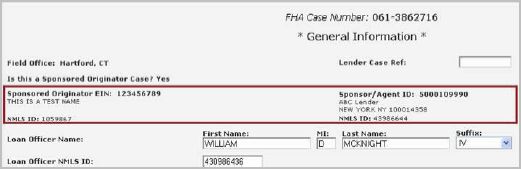
On January 5, 2011, HUD-FHA issued Mortgagee Letter 2011-04, which notifies mortgagees that HUD will begin collecting the unique identifiers assigned by the Nationwide Mortgage Licensing System and Registry (NMLS) to individuals and entities participating in the origination of loans submitted for insurance by the FHA.

FHA-approved mortgagees and their employees must comply with the NMLS registration requirements of the states and entities with jurisdiction over their activities, and must register in accordance with the guidelines set forth by the NMLS.

Additionally, Sponsoring Third Party Originators are now required to ensure that their Sponsored Third Party Originators obtain and maintain an NMLS unique identifier (NMLS ID), as is required by the states and entities with jurisdiction over their activities and in accordance with the registration guidelines set forth by the NMLS.

Please also note that under the Helping Families Save Their Homes Act of 2009 (Pub.L. 111-22), the failure of an FHA-approved lender to comply with requirements of the Safe Act (12 U.S.C. 5101-5116) and applicable state law is cause for withdrawal of FHA lender approval or loss of authorization to participate in FHA lending programs.

HUD expects mortgagees to comply with applicable federal and state requirements governing NMLS licensing and registration. For more information on your state's NMLS requirements and implementation plans, you can visit the NMLS Resource Center.

HUD will capture NMLS IDs at a number of points in the lender approval and loan origination processes, which we have indicated below.

Read Below for Compliance Deadlines.

Line-Webpage

DATA CAPTURE OF NMLS IDENTIFIERS

Line-Webpage

APPLICATION FOR OR RENEWAL OF FHA LENDER APPROVAL

HUD will collect the NMLS company ID:

  • From lenders seeking approval to participate in FHA programs via a new field in the "Application for Federal Housing Administration Lender Approval" (Form HUD-92001-A). The revised Form HUD-92001-A is expected to be released soon and available on HUD's document website.
  • From lenders seeking to renew their FHA lender approval via the completion of a new field in the renewal screens in FHA Connection. Changes to the renewal screens in FHA Connection were released on October 4, 2010.

Completion of these new fields will become mandatory upon their release for those institutions that possess an NMLS company ID.

Line-Webpage

SPONSORING THIRD PARTY ORIGINATORS

HUD will collect the NMLS company ID of Sponsored Third Party Originators:

From Sponsoring Third Party Originators, by their completing the Sponsored Originator Maintenance screen in FHA Connection.

Line-Webpage

LOAN PROCESSING AND UNDERWRITING

Mortgagees will be required to complete the following new fields on the FHA Connection case number assignment screen, as appropriate:

1) Loan Officer: the NMLS ID of the loan officer who took the application from the applicant.
We expect this information to be used, among other things, to observe and enforce compliance with loan officer licensing requirements. Disclosure compliance regarding this data will likely be included in HUD's quality assurance examinations.

2) Sponsored Third Party Originator loans: the Sponsored Third Party Originator's company name and Taxpayer Identification Number (if applicable).
HUD will use the information to provide the Sponsoring Third Party Originators with Neighborhood Watch performance data for their Sponsored Third Party Originators. We expect the information to be used by HUD to assist in ensuring that participants in FHA loan transactions comply with the eligibility requirements governing participation in FHA programs.

Compliance Dates

Until March 31, 2011: entry of the name and NMLS ID of a loan officer is optional.

On and after April 1, 2011: the information must be entered in accordance with the following guidelines:

-The loan officer's first and last name are required, and

-If registered in NMLS, the loan officer's NMLS ID is required.

Here's a screen shot:
Case Number-NMLS
FHA Case Number Screen - General Information

Line-Webpage

HUD/VA ADDENDUM TO UNIFORM RESIDENTIAL LOAN APPLICATION
(HUD 92900-A)

Changes have been made to form HUD 92900-A, "HUD/VA Addendum to Uniform Residential Loan Application," to capture the company name, Taxpayer Identification Number and NMLS ID (if applicable) of a Sponsored Third Party Originator company.

Sponsoring Third Party Originator mortgagees may obtain the revised form at HUD's document website.

HUD 92900-A (9/2010): must be used for all loan applications taken by a Sponsored Third Party Originator.

HUD 92900-A (5/2008): may be used for loan originations not involving a sponsored originator until January 1, 2011.

Line-Webpage

Visit Library for Issuance

Law Library Image
FHA Capture of Nationwide Mortgage Licensing System and Registry (NMLS) Information
Mortgagee Letter 2011-04
January 5, 2011

Post Separator-2-LCG

LENDERS COMPLIANCE GROUP is the first full-service, mortgage risk management firm in the country, specializing exclusively in mortgage compliance and offering a full suite of hands-on and automated services in residential mortgage banking.

Friday, January 7, 2011

FHA: Updates Quality Control Requirements

On January 5, 2011, HUD-FHA issued Mortgagee Letter 2011-02, which clarifies quality control requirements relating to several important areas: (1) due to recent changes to the lender eligibility criteria for participation in FHA programs (i.e., "Helping Families Save Their Homes Act of 2009" (HFSH Act)); (2) "Continuation of FHA Reform: Strengthening Risk Management through Responsible FHA-approved Lenders" (Final Rule FR 5356-F-02); and, (3) Mortgagee Letter 2010-20.

Additionally, this Mortgagee Letter clarifies Quality Control requirements for servicing transfers and loan sales, reporting of fraud and material deficiencies, and the required timeframes for mortgagees to review rejected applications.

Especially if you are a Sponsoring Third Party Originator, we urge you to revise your Quality Plan immediately and implement the requirements contained in Mortgagee Letter 2011-02.

Effective: Immediately

Line-Webpage

SPONSORING THIRD PARTY ORIGINATORS

Beginning January 1, 2011, FHA will neither approve applications for approval as a loan correspondent, nor monitor lenders acting in such capacity for the purpose of the origination of loans submitted for FHA insurance. All lending entities performing in the capacity of a loan correspondent will thereafter be referred to as Sponsored Third Party Originators.

Consequently, all FHA-approved mortgagees will be responsible for performing quality control reviews of their Sponsored Third Party Originators.

The procedures used to review and monitor Sponsored Third Party Originators must be included in a mortgagee's FHA-approved Quality Control Plan.

Therefore, the Quality Control Plan must be reviewed and, where required, revised with respect to the review of loans originated and sold to the mortgagee by each of its Sponsored Third Party Originators.

  • Mortgagees must determine the appropriate sample amount of each Sponsored Third Party Originator's loans to review based on volume, past experience, and other factors specified by the Department in Paragraph 7-6(C) of HUD Handbook 4060.1, REV-2.
  • Sponsors must document the methodology used to review Sponsored Third Party Originators, the results of each review, and any corrective actions taken as a result of their review findings.

A report of the Quality Control review and follow-up that includes the review findings and actions taken, and the procedural information (such as the percentage of loans reviewed, basis for selecting loans, and who performed the review), must be retained by the mortgagee for a period of two years.

Line-Webpage

EARLY PAYMENT DEFAULTS

In addition to the loans selected for routine quality control reviews, mortgagees must review all loans that are originated or underwritten by their company and that are originated by their Sponsored Third Party Originators that go into default within the first six payments (referred to as early payment defaults). (Handbook 4060.1, REV-2 defines early payment defaults as loans that become 60 days past due within the first six payments.)

  • Mortgagees must perform reviews of early payment defaults within 45 days from the end of the month the loan is reported as 60 days past due.
  • The Early Payment Default review report and follow-up, including review findings and any actions taken, along with procedural information (as specified in HUD Handbook 4060.1 Rev.-2, Paragraph 7-6 (E)), must be retained by the mortgagee for a period of two years.

Line-Webpage

SALES AND TRANSFER OF LOANS

Mortgagees are responsible for determining whether the Mortgage Change Record was reported accurately to HUD via the FHA Connection on servicing transfers or sales of loans. Mortgagees' Quality Control Plans must contain a requirement to ensure the review of all Mortgage Change Records for accuracy, as follows:

For cases involving the transfer of legal rights to service FHA-insured loans:

  • The transferee must report the change of legal rights to service to HUD The transferor should verify that the change of legal rights to service has been reported, and that all details contained in the report are accurate.

For cases involving the holder's sale of loans:

  • The holder (seller) must report the sale of loans to HUD The buyer must confirm that the sale of loans has been reported, and that all details contained in the report are accurate.

Line-Webpage

REPORTING OF FRAUD OR MATERIAL DEFICIENCIES

If a mortgagee discovers potential fraud or other serious material deficiencies, it must be immediately reported to the HUD via the Neighborhood Watch Early Warning System (see: Handbook 4060.1 Rev.-2, Paragraph 7-3 (J)).

  • Management is expected to review and respond accordingly to each instance of fraud or other serious material deficiency, indicating what steps if any have been taken to cure and/or resolve these violations.
  • All corrective actions taken in response to instances of fraud or other serious material deficiencies should be reported to the Department via the Neighborhood Watch Early Warning System.
  • Mortgagees must monitor all loans they originate, underwrite or service for potential fraud or serious material deficiencies throughout the lifecycle of the loans.

Line-Webpage

REJECTED APPLICATIONS

Rejected applications must be reviewed within 90 days from the end of the month in which the decision was made.

Line-Webpage

Visit Library for Issuance

Law Library Image
Quality Control Requirements for Direct Endorsement Lenders
Mortgagee Letter 2011-02
January 5, 2011

Post Separator-2-LCG

LENDERS COMPLIANCE GROUP is the first full-service, mortgage risk management firm in the country, specializing exclusively in mortgage compliance and offering a full suite of hands-on and automated services in residential mortgage banking.

Tuesday, December 28, 2010

Singular destiny where the goal keeps shifting ...

COMMENTARY: by JONATHAN FOXX

Jonathan Foxx, former Chief Compliance Officer of two publicly traded financial institutions, is the President and Managing Director of Lenders Compliance Group, the first full-service, mortgage risk management firm in the country.

Line-Webpage

In the last few years, the US has been undergoing significant economic and political changes - some of which have their roots in many past decades. We find the momentum of these changes, now forcefully underway, to be altering many of our financial, political, and professional plans.

Change is not easy to experience. Nor is crisis, fraught with uncertainty.

The Chinese character for crisis conveys our current circumstances: a perilous situation, an incipient moment when something begins or changes, and when one should be especially wary.

Line-Webpage

Reflections

We are a unique generation of Americans, blessed with the benefits of advanced technologies, more affluent than our forebears, more aware of the world around us, able to explore our galaxy and see into the far reaches of the universe, indeed able to look deeply into the infinitesimally small, physical world within our own human being.

But no matter how much we learn about ourselves and our world, we will never open a brain and find the traces of a compassionate thought, or open a heart and find the feeling of love. Yet we do know what we think and how we feel. As both surveyors and inhabitants of our world, as its caretakers and caregivers, there are many ways and means to improve the quality of life for all living beings. Living not only for ourselves, we want to pass on a better world to the next generation. Yet it is through the application of knowledge, howsoever derived, that risks emerge and shape the future.

Line-Webpage

Goals and Destiny

In these last few days of this year, reflecting on the crises facing the mortgage industry, it is clear that change has been blunt, quick, and irreversible. Many industry members have lost their jobs and their savings and, in some instances, their companies. A plethora of new regulations, new proposed regulations, new consumer protection laws, financial reform legislation, new federal and state disclosure requirements, and new rules regarding mortgage originator compensation, seem to be promulgated without end. Some market actors have been caught up in a dragnet of disputes, such as in foreclosuregate, loan modification delays, loss mitigation failures, mortgage loan fraud, appraisal fraud, identity theft scams, strategic defaults and high mortgage default ratios. FHA, Fannie, and Freddie are barely hanging on to their missions and corporate charters, even with potential or actual "bailouts" from taxpayers. Litigation and lobbying abound!

And yet, there are those on Wall Street who believe that subprime securitization will return soon. There are those who want to delay financial reform. There are those who want to deactivate plans for a consumer financial protection agency. There are those who believe that regulators should serve the banks, rather than to assertively monitor them on behalf of taxpayers and to preserve the public trust.

We have clients that have fought valiantly to stay in business at a time when their peers have had to shut down - and, to the former's credit, they have made it through the struggle. And we have clients that proactively come to us now and seek guidance in implementing the many new regulatory compliance requirements. Because I have witnessed our clients' commitment, fortitude, and drive, I know the mortgage industry will survive and continue to foster innovative leadership.

Line-Webpage

Crossroads

In general, actors in a market have conflicting goals. The mortgage and financial markets are no exception. Conflicts are necessarily delineated between certain market participants.

At the crossroads of politics and economics, our democracy will find its way forward. But out of the differing expectations, all of us need to forge bold goals and transgenerational resolutions. And we need to identify the risks associated with our goals.

Perhaps 2011 will bring decisive options and opportunities, heretofore unrecognized, to bring closure to some of the mortgage industry's most pressing concerns.

As we meet the future, let's be mindful that we will be judged not on what we thought or felt, but on what we actually did at a time of crisis!

Line-Webpage

Singular destiny where the goal keeps shifting …

Please consider Beaudelaire's penetrating verse,
as we boldly, compassionately, and humbly
seek our own precious goals in 2011:

Singulière fortune où le but se déplace,
Et, n'étant nulle part, peut être n'importe où!
Où l'Homme, dont jamais l'espérance n'est lasse,
Pour trouver le repos court toujours comme un fou!

Singular destiny where the goal keeps shifting,
And, being nowhere, can perhaps be anywhere!
Where Man, whose hope never grows weary,
Is always seeking a short respite like a fool!

"Le Voyage" (The Voyage)
from Les Fleurs du Mal - Charles Beaudelaire. (My translation)

Line-Webpage

Best wishes from all of us to all of you -

for a safe, joyous, and fulfilling New Year!

Line-Webpage

I would welcome your comments.

Please feel free to email me at any time.

Action Button Image 1